


Table of Contents
Employee listening is the regular collection, analysis, and action on employee feedback to understand employee needs, concerns, and preferences. It helps organizations identify issues early and build a more supportive, engaged workplace at every stage of the employee lifecycle.
Leaders cannot always see what their teams are facing during the workday, and a remote or hybrid workforce makes it harder. For employees to have a positive employee experience, they need to be heard. That is the purpose of employee listening.
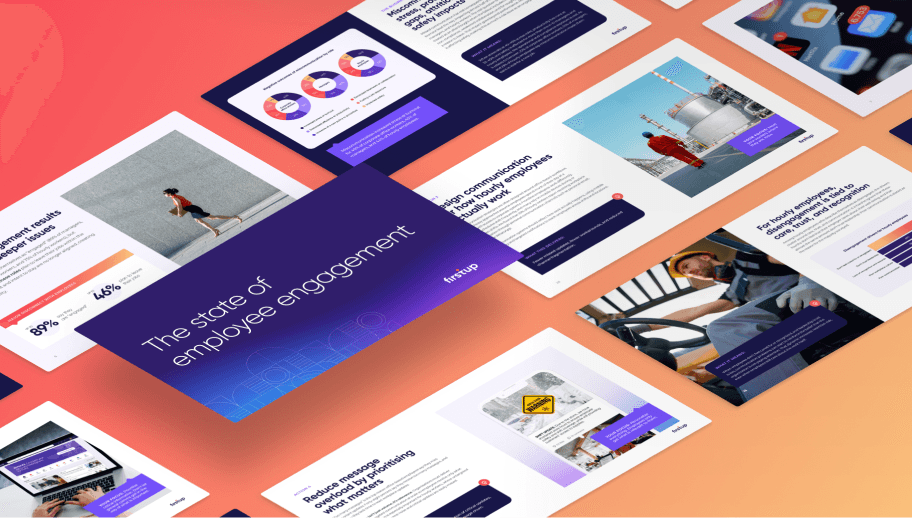
It is easy for important news to get lost in the daily flood of messages. In fact, in Firstup's 2026 State of Employee Engagement report, 61% to 67% of employees said they had missed an important policy or procedural update. Listening is how you stay close to your people and catch problems like this before they grow.
Employee listening is how you gather and understand the employee experience. Through performance reviews, requesting feedback, sending out polls and surveys, and staying open to new ideas, companies can interpret and act on what their employees need, and in turn boost engagement, motivation, commitment, and morale. We know that employee engagement is crucial to a company's success, which raises the question of how to make sure your organization is moving toward its goals.
The answer is simple: listen. A lot, and consistently. A meaningful employee listening program gives you data-driven insights into your employees' experience and lets you make decisions that drive engagement and move the business forward. Here are some ways to get started.
Deliver a hyper-personalized employee experience at scale
Key Insights
- A successful employee listening program runs on continuous, real-time feedback, so concerns get addressed quickly and employees stay engaged.
- Offering a variety of feedback formats, including pulse surveys and focus groups, reaches employees in the ways they prefer and prevents survey fatigue.
- Targeted questions, tailored to specific roles or departments, produce more relevant insights and make employees feel their voices are heard.
- AI-powered sentiment analysis surfaces hidden patterns in feedback and flags areas of concern early, so you can act before issues escalate.
- Even among engaged employees, 40% to 46% plan to leave within 12 months, so listening only pays off when it leads to visible action.
- Combining traditional methods like exit interviews and suggestion boxes with feedback platforms ensures no voice is left unheard.
Build better polls and surveys

Offer a variety of formats
Just like we tune out repetitive ads, sending the same survey format over and over leads to lower response rates. To keep employees engaged, switch up your survey formats and embrace multi-channel feedback collection, making it easier for employees to share insights in the ways that suit them best.
Multi-channel feedback
Employees are diverse in how they communicate. Whether through email surveys, mobile apps, in-person focus groups, or video feedback, you need to reach them where they work. Offering feedback options across these listening channels captures a broader range of voices and ensures employees feel heard, especially those working remotely or on the front lines. Digital feedback platforms can also collect real-time responses, supporting a continuous listening strategy that goes beyond one-time surveys.
Pulse surveys and annual engagement surveys
Short, frequent pulse surveys capture real-time insights you can act on quickly without overwhelming employees, which helps avoid survey fatigue. For a fuller picture, an annual engagement survey provides deeper data on satisfaction, culture alignment, and engagement. The strongest programs use both: continuous pulses for real-time visibility and an annual census for depth.
AI-powered sentiment analysis
AI-powered sentiment analysis reads not just what employees say but the emotional tone behind it, surfacing patterns across thousands of open-text responses that would otherwise go unnoticed. That lets you respond to the concerns that matter most and prioritize the issues showing up across teams.
Fresh formats to try
Beyond varying channels, mix up the survey formats themselves. Different approaches re-engage employees who have grown tired of traditional methods. A few to consider:
- Radio buttons
- 1-5 ratings
- Rankings
- Stars or emoji polls
- Picture polls
- One-question open text
One-on-one meetings and focus groups
Sometimes you need to go beyond surveys. One-on-one meetings between managers and employees surface personal insights a survey can miss. Employee focus groups open up deeper discussion on specific topics, generating in-depth feedback that complements your survey data.
Stay interviews and exit interviews
Learn from both those who stay and those who leave. Stay interviews with high performers help you understand what keeps them engaged and what could improve. Exit interviews provide structured feedback from departing employees, helping you identify turnover causes and fixes across the employee lifecycle.
Suggestion boxes and ERGs
For candid input, suggestion boxes, physical or digital, still gather anonymous feedback. Employee Resource Groups (ERGs) add feedback from underrepresented or specific employee groups, helping ensure every voice in the organization is heard.
Firstup allows us to make it happen
“The best way to reduce turnover is to increase engagement. One of the best ways to energize the team about the work they’re doing is to highlight it for the rest of the organization to see.”
Ask the right questions in your employee engagement surveys
By asking deeper, relevant questions of your workforce, you can better understand what they are thinking, and they will be more likely to take part. And by avoiding certain phrases and poll types, you lower the chance of turning employees off from taking them at all.
Targeted listening
The key to impactful surveys is asking the right questions of the right employees. A targeted listening approach, where questions are role-specific or region-specific, uncovers challenges that a generic company-wide survey would miss. When employees see questions relevant to their day-to-day work, they engage more and provide more valuable insights. Tools like Firstup let you segment surveys by role, department, or location, so you reach the right people with the right questions every time.
Role of AI and data
AI-driven analytics take this further by analyzing previous survey responses to predict where to focus your next round of questions. You can identify areas of concern early and address them before they escalate, so your surveys consistently target the most pressing concerns of your workforce.
Some good poll questions to ask:
- When have you felt most valued and appreciated? The opposite?
- What aspects of the company culture do you appreciate most? What do you wish were different?
- What resources, benefits, and approaches to work are you finding most helpful right now? What needs attention?
- Do you feel you have opportunities for growth and encouragement to explore them?
- If you could change something about work right now, what would it be?
- Do you have an idea for a poll?
What you should avoid when drawing up poll questions:
- Coercive or leading questions that make it clear which answer is the “right” one. Example: “How awesome are we?”
- Ambiguous questions that cannot really be answered. Example: “Are we the best company that does or makes this?”
- Assumptive or loaded questions. Example: “Why aren’t you married yet?”
- Negative questions. Example: “I don’t enjoy working from home. True or false?”
Target your surveys to specific audiences
Ever received a survey about a project or department you had nothing to do with? Those help no one. Avoid generic all-company polls whenever you can.
Instead, build segmented targets you can communicate with directly about topics that pertain to their work and life. Using a workforce communication platform like Firstup, you can send surveys and content to targeted workers when it is relevant to them, without filling up everyone's inbox, and see which communications resonate so you can optimize the ones that do not.
Deliver a hyper-personalized employee experience at scale
Have some fun once in a while
Don't burden employees with dread. When polling, don't ask only about work, have some fun with some of your surveys. What band from the past would they want to see today? Who is going to win the Super Bowl? What did you want to be when you grew up? Friendly, team-bonding questions are always a good conversation starter.
Empower those closest to your colleagues
Not every poll or survey needs to come from the top or from Human Resources, and broadening your listening efforts beyond leadership reaches voices they cannot. Sometimes it is better to be a facilitator, not the owner, of a conversation. There is often a level of trust between co-workers that leadership struggles to reach, so tapping into that established rapport is key to generating the survey responses that are most useful to your organization.

The goal is to remove the mystique around asking employees for their insights. They need to feel comfortable giving honest responses and assured that their opinions are valuable. Some ways to do that:
- Equip managers with toolkits and resources for deeper, more meaningful conversations.
- Tap into safe zones for employees, empowering those closest to their colleagues and building on existing trust.
- Engage employee resource groups for tougher questions and discussion guides, where employees are often more willing to open up.
- Offer location-specific or role-specific focus groups.
Commit to response and action before even asking
Workforce communication runs both ways, from leadership to staff and from staff to leadership. Two-way communication is the lifeblood of an organization, and it is on you to make sure employees are not only heard but that what you hear is acknowledged and acted on. The hardest part of employee listening is not collecting feedback, it is visibly acting on it. Survey fatigue sets in less from too many surveys than from feedback that goes nowhere. So before you ask a single question, be ready to respond to what comes back.
Decide and communicate the course of action for your findings before you ask the first question. Will the data determine a decision or guide one? Who will use it? Will it feed further discovery, such as focus groups or task forces?
- Remember that when decisions are made without employee input, people start holding back their ideas.
- Commit to action planning and act quickly, forming action-plan teams before the results land.
- Tell specific audiences if and when they will learn the results, ideally within 30 days.
- When employees know their responses will be considered, they answer with genuine thought and care.
Leverage technology for continuous listening
Technology is the backbone of an effective employee listening program. With platforms like Firstup, you can gather, analyze, and act on employee feedback in one place. Instead of waiting for annual surveys, automation turns feedback into actionable insights in real time so you can respond quickly to what your workforce needs.
These platforms do more than collect data. By applying AI, they can flag when employees may be disengaging, giving you time to act before issues escalate. Whether automating personalized surveys based on an employee's journey or surfacing trends in real time, the technology helps you track the pulse of your organization so no voice goes unheard.
The result is a shift from reactive to proactive listening. With the right tools, a continuous listening strategy lets you reach your team where they are and act with the speed and precision today's workforce expects.
Listen responsibly: privacy and compliance
Good listening is never about surveillance. It is about inviting feedback and acting on it, with your people clear on what you are collecting and why.
In most places, employers can gather workplace feedback and monitor work systems as long as they give clear notice and, in many regions, get consent. The rules vary by country and state, and the tightest restrictions apply to analyzing biometric or emotional data. The simple standard is honesty: tell people what you collect, keep responses anonymous where you have promised to, and be clear about how you will use what they share.
It is worth getting this right from the start. When employees trust how their feedback is handled, they are far more willing to share honestly, which is the whole point.
Conclusion
Listening pays off, but only when you act on what you hear. Even employees who call themselves engaged can be quietly looking elsewhere: in Firstup's 2026 State of Employee Engagement report, 40% to 46% of engaged employees said they planned to look for a new job within a year, often with communication breakdowns playing a part. The good news is that this is something you can get ahead of.
It matters at scale, too. Gallup estimates that low engagement and disengagement cost the global economy around $8.8 trillion, roughly 9% of global GDP. Building an effective employee listening strategy takes time, effort, and commitment. You can't expect every employee to answer every survey, but by opening up purposefully to what your workforce needs, wants, and expects, you support both their engagement and the success of your organization.
Deliver a hyper-personalized employee experience at scale
FAQs
Table of Contents
Related posts
Subscribe via Email
Subscribe to our blog to get insights sent directly to your inbox.
Related posts




Sign up to receive the latest news and resources from Firstup
Firstup delivers personalized communication and data insights to improve the employee experience at every moment that matters